
Clougha Pike
Maybe you can't step into the same river twice, but you surely can climb the same hill multiple times.

Originally published in TGO (The Great Outdoors) Magazine, August 2015; republished here with a postscript, April 2026.
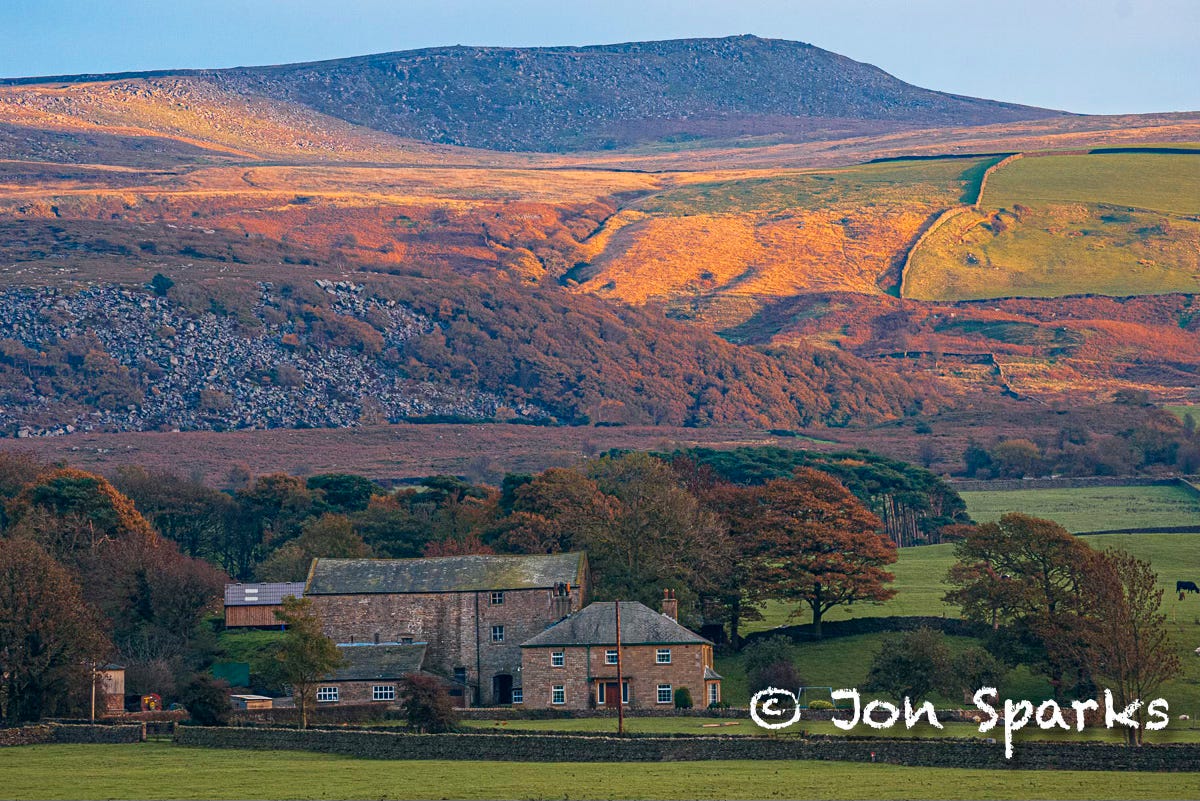
Two minutes out of the car-park, the track forks. I sometimes get here and only then decide which way I’ll go. And it’s just the first of many points where choices offer themselves. Possible routes branch and spiral and re-connect into a glorious fractal snarl. `
The thing is, I’ve been here before. I don’t have an exact count, but by a conservative reckoning I’ve been to the summit at least two hundred times. There are probably even more occasions when I’ve ranged over the lower slopes without going all the way to the top.
Two hundred times up one hill, yet I still haven’t (quite) done all the Wainwrights1, never mind the Munros, Corbetts, Marilyns, whatevers. What kind of hill-walker does that make me?
And you might also ask, which hill am I talking about anyway? This is Clougha Pike, at the northwest extremity of the Forest of Bowland. It’s not particularly high (413m), but it’s extensive: at least 6 sq km of Access Land, never mind the enclosed lower slopes.
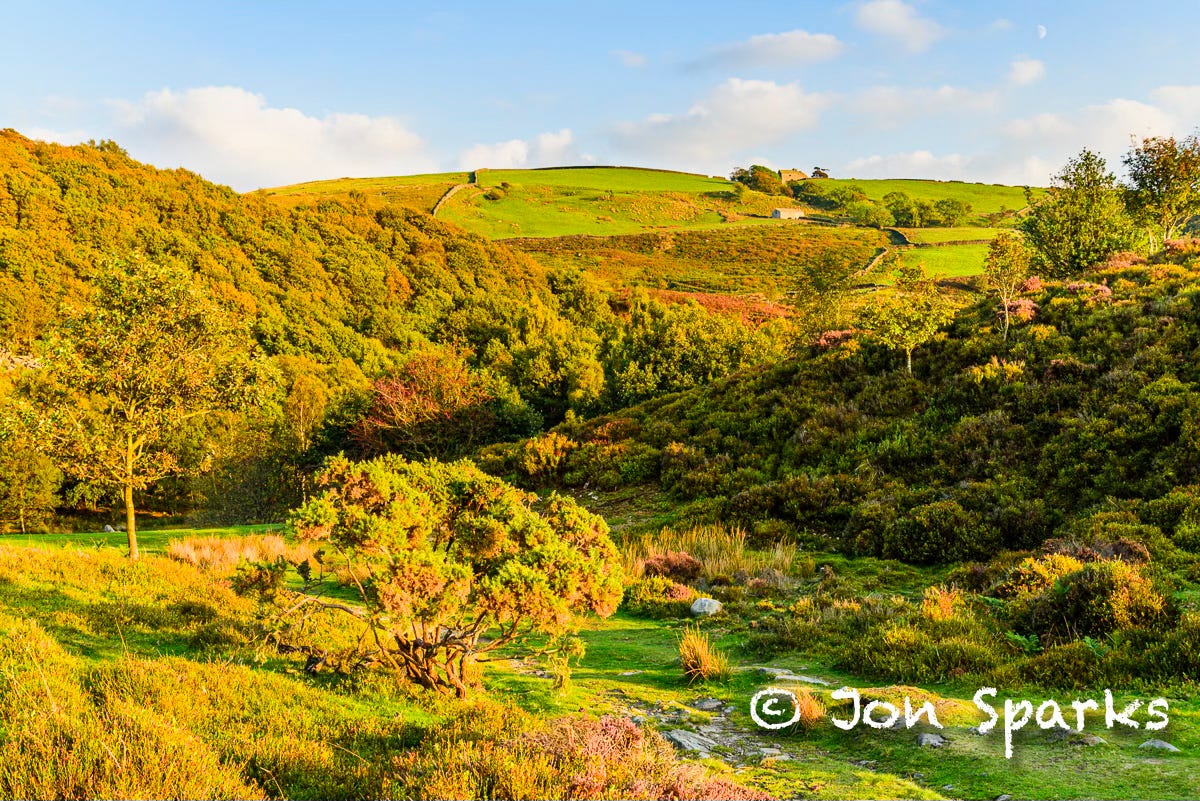
This time at the fork I don’t hesitate but bear right, taking the primary route to the summit. The boulder chaos of Birk Bank rears up ahead. The path loops right to skirt it, crossing a marshy area on a wooden walkway, then climbs again, ducking under gorse, past slender oaks. Little cascades burble in the stream on my right. The path has changed course over the years, as people seek new ways round soft patches. Then there’s a straight section, incised deep between mounds of bilberry foliage, running up to a junction of walls and two tall stiles. Another point of choice.
Over the left stile and you can descend into a deep hollow. Windy Clough slices into the ridge, prominent in distant views2. It’s enclosed on all sides, but water escapes somehow: beneath the stiles the rock must be fissured, or maybe just a jumble of boulders. On the western rim of the Clough, there’s a line of low crags. I’ve explored these too. The steep, silvery gritstone isn’t really high enough to make it worth bringing a rope, but quite high enough to lure the unwary climber into scary positions above bad landings.
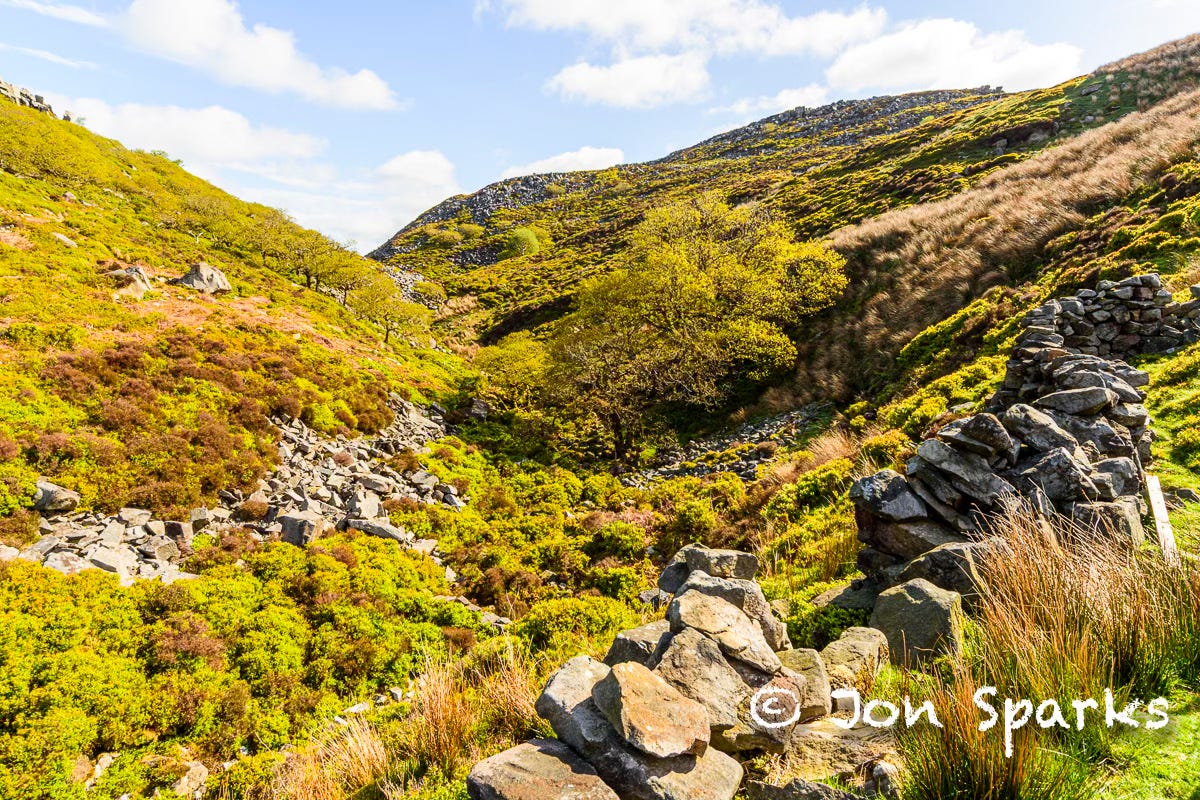
Windy Clough is only the most obvious of several channels scoured into the ridge and around its flanks, carved by meltwater torrents from, and sometimes under, the retreating ice-sheet towards the end of the last Ice Age—as I learned the very first time I came here, on a school field trip aged eleven or twelve.
Today, I take the right hand stile. The path veers away rightwards then bears left over a gentle dome of soggy, sedgy moorland. You might wonder why the path doesn’t follow the gritstone ridge away to the left. It would surely be drier – and it is, but not easier, and certainly not quicker. Even between the sharp interruptions of Windy Clough and Little Windy Clough (name self-explanatory), it’s a maze of outcrops and boulders, with deep holes often lurking under innocuous-looking bilberry and heather. Trust me, you can’t make haste here.
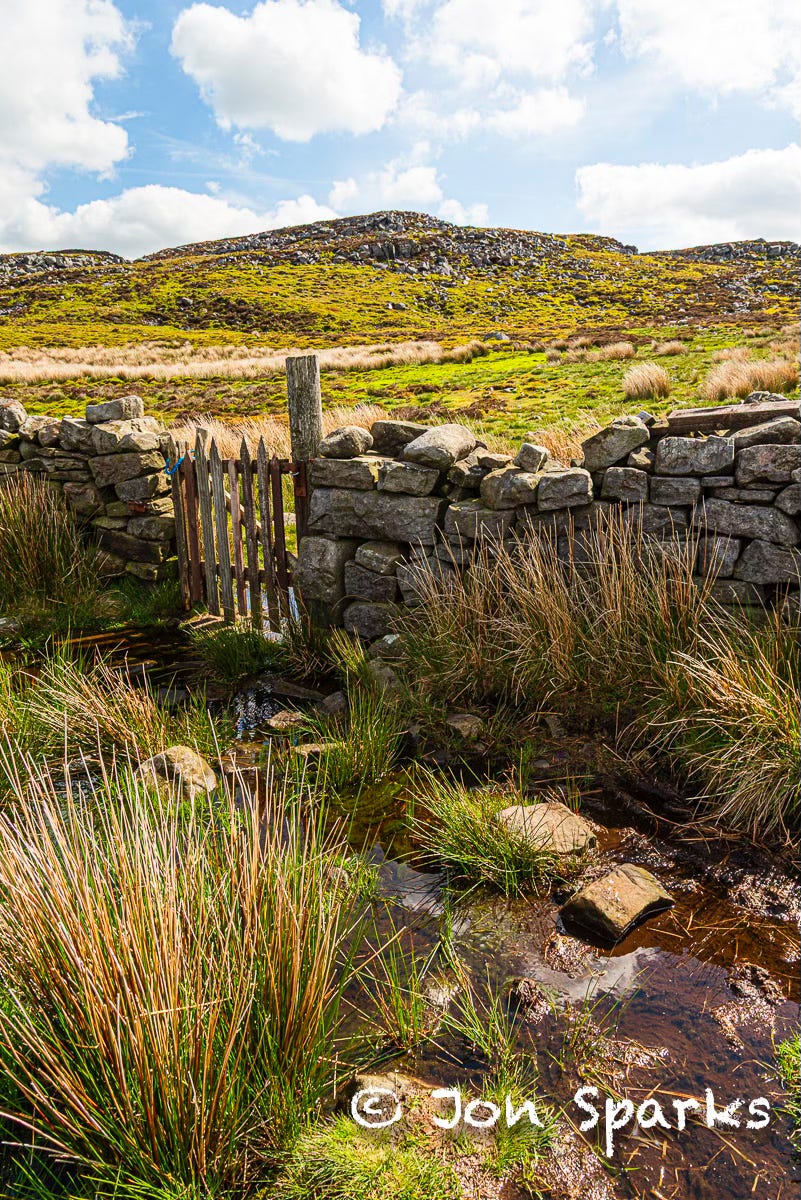
Rushes and a few stepping-stones get me to the gate I call the ‘fell gate’, even though I’m already high on the fell. On familiar hills, you pick your own landmarks, find personal names for things. Beyond, the path angles across the last of the moor, back to the rocky ridge, then turns right along the ridge-wall, until this ends above a little craggy nose. Once, the only way was to edge round the end of the wall on the rocks—not at all difficult, unless very icy—but recently a gap has appeared in the wall, which looks very much like vandalism to me. There’s also now a gate just below, but to me the rocks are the only way. It’s personal.
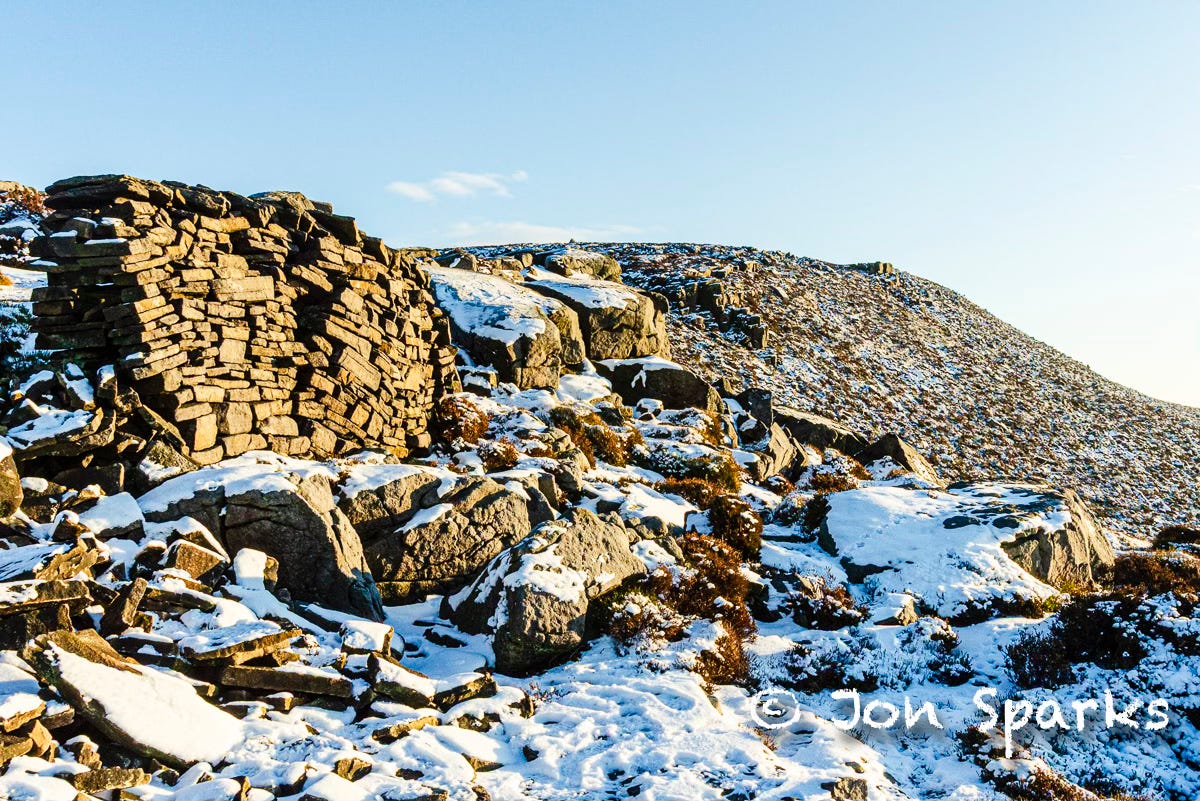
A prominent cairn on the skyline ahead tries to deceive, but I know there’s still a final few minutes, over easier slopes, with lots of bare slabs, to the top. This has a white trig column and two stone enclosures, one decayed, the other able to shelter a dozen people. I’ve been here when that shelter is more than welcome, climbed Clougha on days when I’d probably have turned back on any hill I knew less well. I won’t say I couldn’t get lost here, but conditions would have to be truly dire.
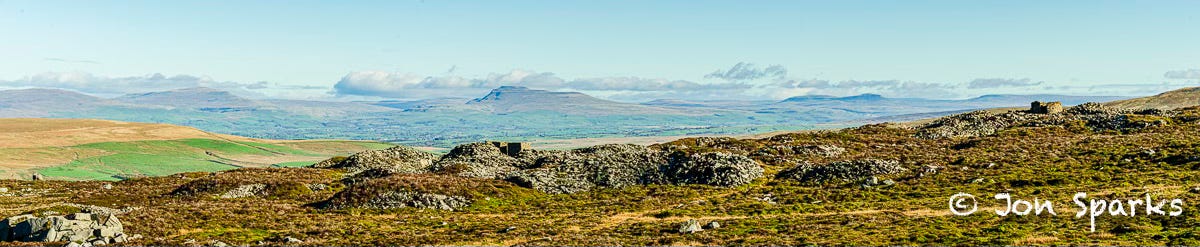
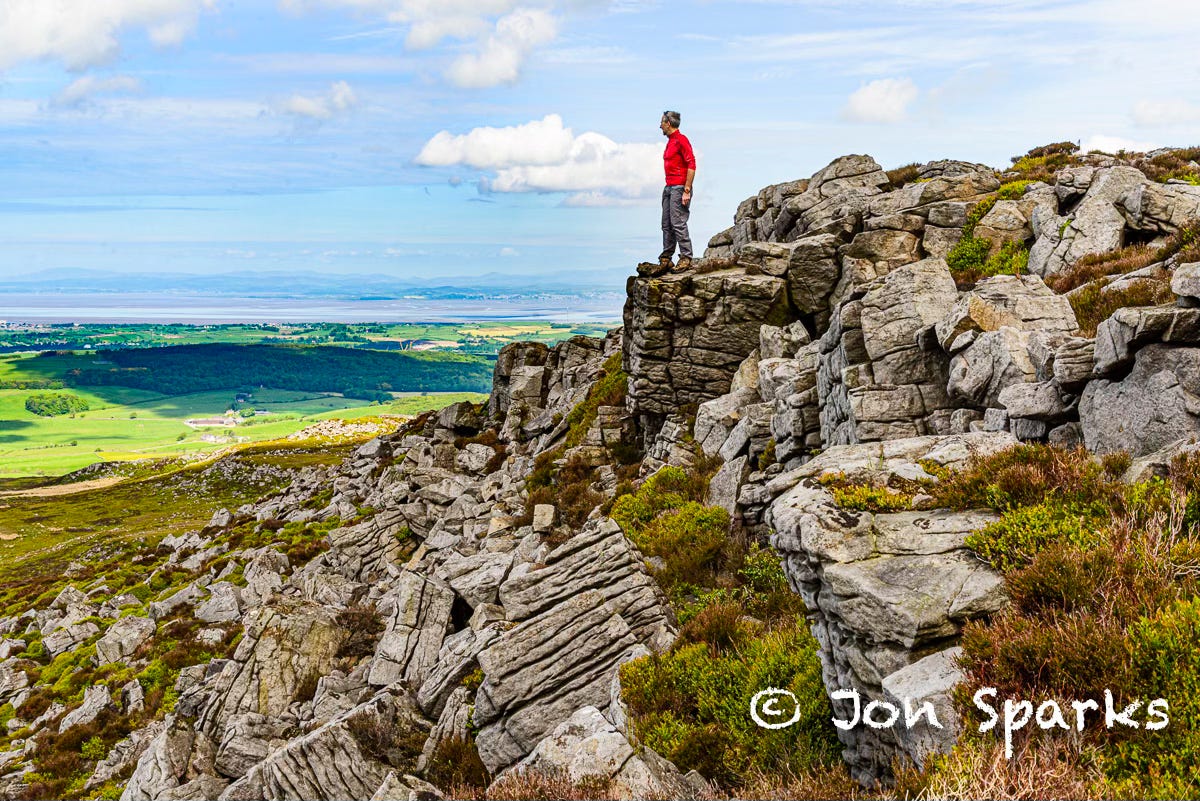
I’ve been here when there’s no view at all, but today it’s pretty clear, rocks and moor falling away west to the Quernmore valley, then a green rise, the sprawl of Lancaster and Morecambe; beyond that, Morecambe Bay, backdropped by the Lakeland skyline. Follow the ridges east, over the Howgill Fells and on to the Yorkshire Three Peaks before the Bowland Fells pull the horizon close. Complete the 360-degree scan with the green levels of lowland Lancashire. On clearer days you might pick out blue, papery outlines beyond; the Clwydian Hills a hundred kilometres off, the Carneddau grander but more distant still. The Isle of Man is discernible much more often—though not today—directly over the Lancaster–Morecambe conurbation.
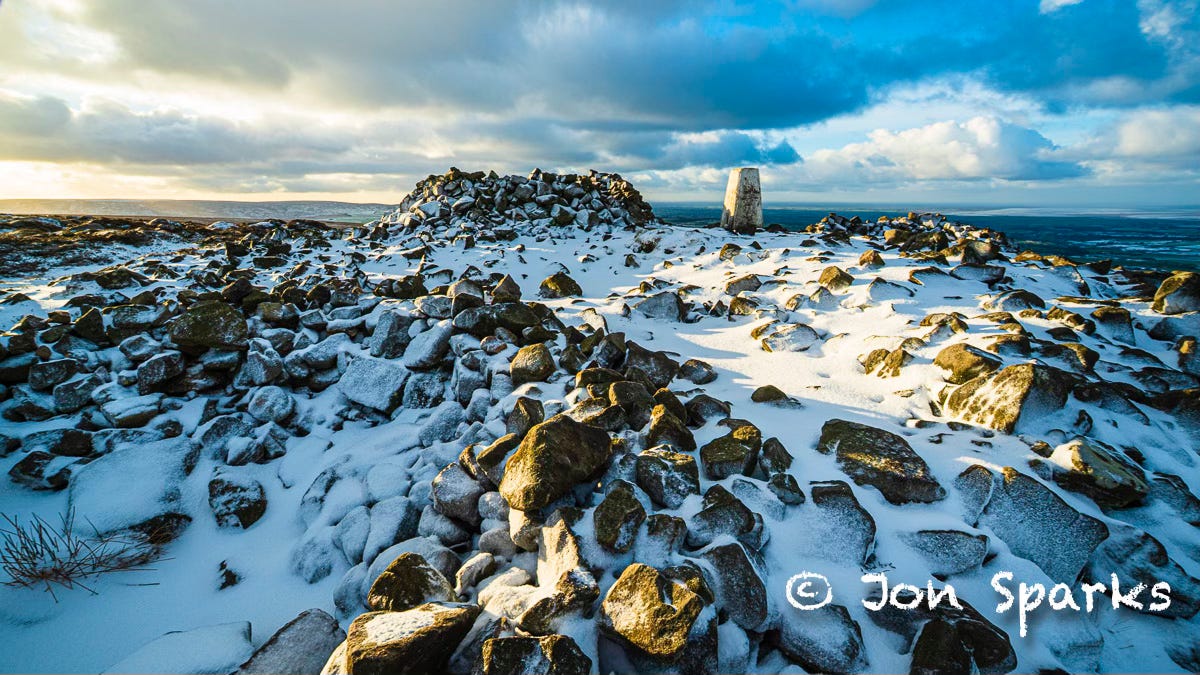
As the crow flies, Clougha’s summit is only 7km from the centre of Lancaster, and prominent from many places in the area. It’s the local hill for a hundred and fifty thousand people. Familiarity can so easily breed, if not contempt, at least a taking-for-granted. Yet to me its value is utterly, inextricably, bound up with its accessibility. I can see Clougha from the bedroom window, can do a round trip, door-to-summit-to-door, between breakfast and lunch. There are people in Lancaster who regularly drive out and run up and down in their lunch hour; some will have climbed it far more often than I have. Two hundred ascents is nothing, really.
How do you measure the value of a hill like Clougha? (And there are many hills like it, though each is unique). There’s the fact that the carbon footprint of all my ascents combined is less than one trip to the Alps. I used to live even closer than I do now, often walked or cycled to the foot of the fell. But that’s not why I keep coming back. I keep coming back for my fix of something that I might call wildness. Clougha isn’t truly wild, of course, with its worn paths and stone walls, its skirts of pasture and its shawl of grouse moor. But it has many elements of the wild: roughness, unpredictability, disorder; above all, that sense of space, of long horizons.
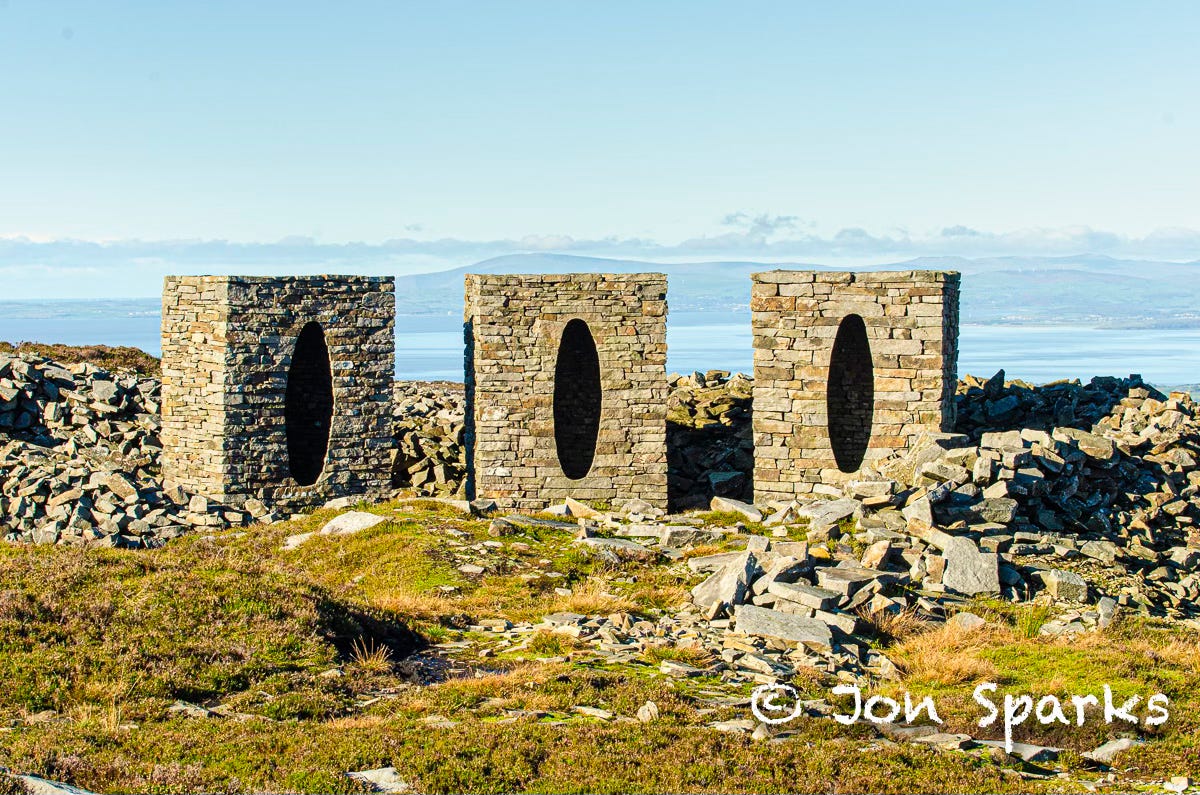
Standing by the trig column, I face another choice. I can return the way I came, or continue over level moor to a stile. From here I can head down to a shooters’ track, follow this down and loop around, eventually meeting my outward track at the very first fork. And this ‘back way’ branches into a ‘back back way’, down a narrow path past grouse-butts and shallow, overgrown quarry pits, to another abrupt meltwater channel. Near the point where ‘back back way’ leaves the shooters’ track, there’s another of Clougha’s surprises; among more old quarry-pits, three stone cubes, each enclosing an egg-shaped space. This work, by the renowned artist Andy Goldsworthy, is properly called ‘Clougha Pike’. I’ve also seen it referred to as the ‘Three Chairs’—apt enough, but this name belongs to a natural feature a good 600 metres away.
One odd thing about Clougha is that when you leave the summit in this direction, there’s no real descent. The summit is at 413m and Clougha doesn’t even have a separate loop in the 410-metre contour; it’s technically just a rocky step in the ridge of Grit Fell. But still I’ve climbed Clougha 200 times. With Grit Fell, it’s probably a tenth as many, if that.
Today, time is nagging, so I return by the same route. Clougha still has a few surprises in store: dozens of glossy black centipedes on the rocks near the end of the wall; a Fox Moth caterpillar blundering across a lower path as a cuckoo calls in the oakwoods. The more I come here, the more I see. But surely that’s true of any hill.


Postscript—April 2026
This was originally published over a decade ago. As long-term followers will know, I’ve had one or two health issues in the intervening years (here’s one Post around that), but for most of the time have maintained a fair level of fitness and activity—at least until rudely interrupted by a broken leg last August. It was a serious injury and recovery’s been slow, but I was pleased to make it up our local little hill, Nicky Nook, in November (slowly, with the aid of walking poles) and make a reasonable fist of some mild scrambling on Gummer’s How in the Lakes in February.
And on Easter Monday, with the weather finally feeling spring-like, I had only one answer to my partner’s question about what we might do: Clougha. To my relief, and intense delight, it all went smoothly; up by the rough and intermittently boggy front way, down by the easier route ‘over the back’, using the ugly but convenient shooters’ track, which offers a chance to enjoy the sweeping views without having to constantly watch your feet.
The title which the TGO editors gave the 2015 piece has never been more apt: Hello, Old Friend.
And, between a reassessment of my original calculations, and adding a few more ascents since 2015, I think I can reasonably claim to have climbed Clougha at least three hundred times.
Still haven’t…
It’s very obvious to travellers on the M6 (especially Northbound) around Junction 26. Train travellers (West Coast Main Line South of Lancaster) need to be more vigilant.